
WIP Inventory: How to Value It, Age It and Handle Job Work (India)
Work in progress (WIP) inventory is the cost of goods started but not finished, valued as materials plus labour and overhead already spent, measured in equivalent units at month end.

By Praveen Nune, Co-Founder & CEO · Updated 14 Oct 2026
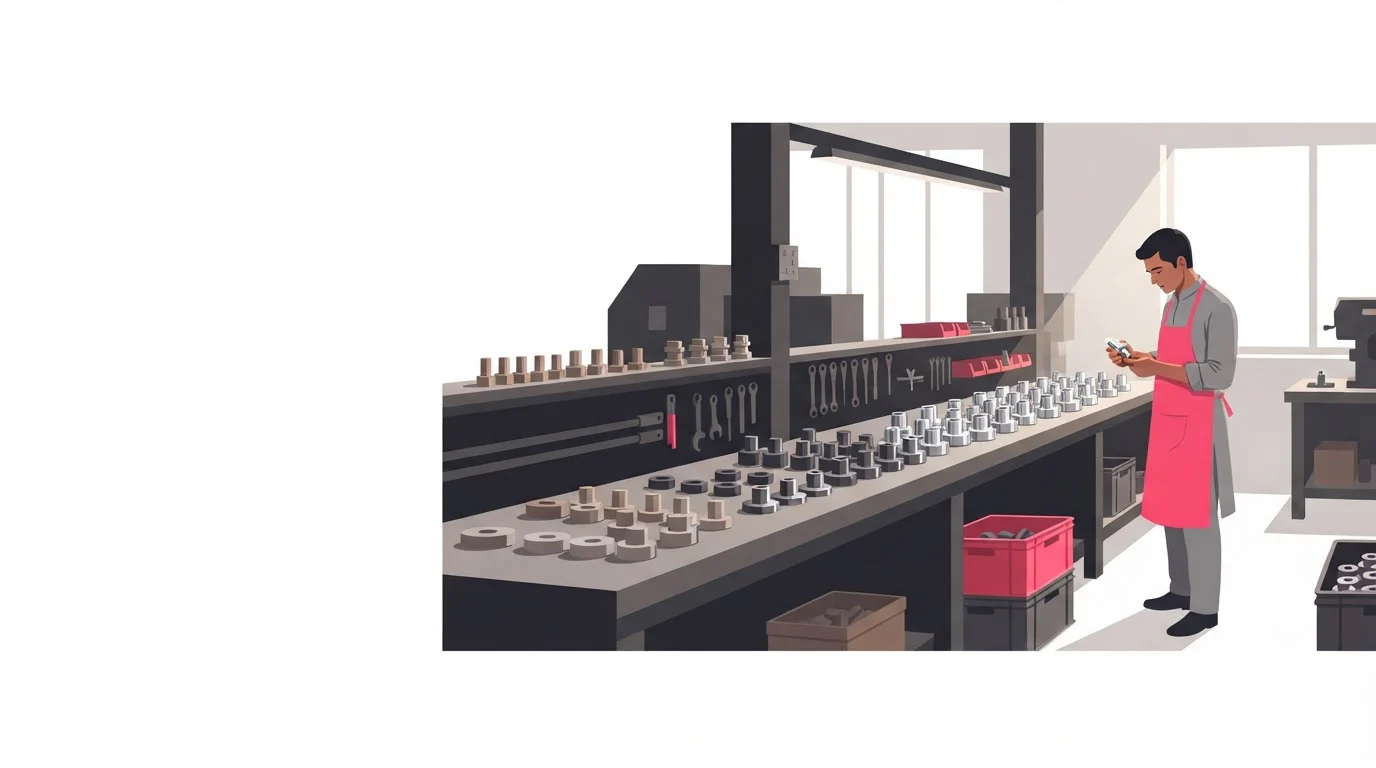
Key takeaways
- WIP inventory is valued by equivalent units, not by the opening-plus-costs-minus-COGM formula alone, because COGM cannot be known before the partly finished units are valued.
- Valuing partly finished units at full unit cost overstates closing WIP. In our worked example below the error is about ₹59,300, or 36%.
- Ind AS 2 measures WIP at the lower of cost and net realisable value (NRV, the selling price less the costs to finish and sell). It loads fixed overhead on normal capacity, not on a slow month.
- Goods at a job worker are still your WIP. Inputs have a one-year return clock under Section 143, so flag them well before it ends.
In this article
- 1How do you value work in progress (WIP) inventory at month end?
- 2Why can't the opening-plus-costs-minus-COGM formula find WIP inventory on its own?
- 3What do Ind AS 2 and the balance sheet require for work in progress?
- 4How do you treat stock at a job worker in your WIP?
- 5How do you spot jobs that have stalled?
- 6Can a spreadsheet or Tally carry WIP, and when does it stop working?
- 7How does Arka Inventory help you track work in progress?
- 8Frequently asked questions
The usual formula for work in progress (WIP) starts with a number you do not have yet. Ending WIP equals opening WIP plus manufacturing costs minus cost of goods manufactured (COGM, the cost of units finished in the period). But COGM is only known once the partly finished units have been valued.
In a plant, that means counting what is on the floor, judging how far along each job is, and spreading cost over finished-unit equivalents. Stock at a job worker, a third party that processes your goods, adds a legal clock. Under Section 143 of the Central Goods and Services Tax (CGST) Act, 2017, inputs sent out for job work must come back within one year, or the removal is treated as a supply.
This page walks through the month-end method in rupees, the Indian Accounting Standard (Ind AS) 2 rules that govern the number, a sheet to copy for your own jobs, and a test for WIP that has stopped moving. It is written for owners, plant heads and accountants closing the books.
How do you value work in progress (WIP) inventory at month end?
Value WIP inventory in four steps. Count the units still on the floor. Estimate how complete each is for materials and for conversion cost (labour plus factory overhead, the indirect costs of running the plant). Convert that into equivalent units, then divide the cost pool, which is opening WIP plus the month's costs, by the equivalent units. An equivalent unit is the amount of work contained in one finished unit.
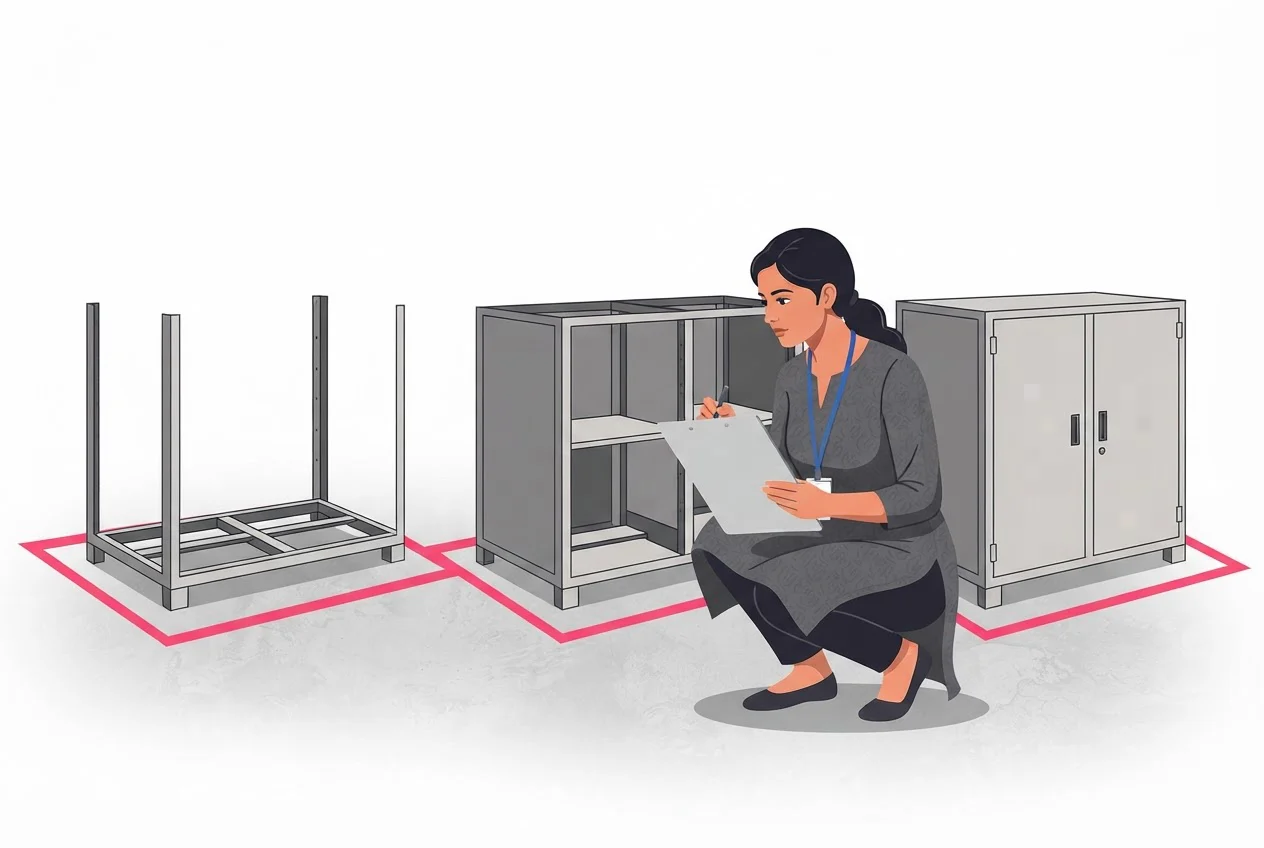
Here is the method in rupees. This is our illustrative model with assumed inputs, not company data. It uses the weighted-average cost formula, which blends opening and new cost into one average. Ind AS 2 permits it alongside first-in, first-out (FIFO).
Assumptions:
- Opening WIP: 200 units, materials 100% and conversion 50% complete, carried at ₹1,10,000 (materials ₹80,000 plus conversion ₹30,000).
- Started in the month: 1,000 units.
- Completed and moved to finished goods: 900 units.
- Closing WIP: 300 units, materials 100% and conversion 40% complete.
- Costs added in the month: materials ₹4,20,000 and conversion ₹3,06,000.
| Step | Materials | Conversion |
|---|---|---|
| Equivalent units | 900 + (300 × 100%) = 1,200 | 900 + (300 × 40%) = 1,020 |
| Cost pool (opening + month) | ₹5,00,000 | ₹3,36,000 |
| Cost per equivalent unit | ₹416.67 | ₹329.41 |
The cost per finished unit is ₹746.08. That gives:
- Transferred to finished goods: 900 × ₹746.0784 (unrounded) = ₹6,71,471.
- Closing WIP: materials 300 × ₹416.67 = ₹1,25,000, plus conversion 120 equivalent units × ₹329.41 = ₹39,529. Total ₹1,64,529.
- Reconciliation: ₹6,71,471 + ₹1,64,529 = ₹8,36,000, which equals ₹1,10,000 + ₹4,20,000 + ₹3,06,000.
The rupee figures use unrounded per-unit costs and are rounded to the nearest rupee, so a check with the two-decimal unit costs can differ by a rupee.
The month's entries follow the same numbers:
- Debit WIP and credit raw materials for ₹4,20,000.
- Debit WIP and credit wages and applied overhead for ₹3,06,000.
- Debit finished goods and credit WIP for ₹6,71,471.
The month-end WIP sheet to copy
| Job or item | Stage | Units | Materials % | Conversion % | Equivalent units (materials) | Equivalent units (conversion) | WIP value |
|---|---|---|---|---|---|---|---|
| Batch A (example) | Assembly | 300 | 100% | 40% | 300 | 120 | ₹1,64,529 |
Under the table, add one line: opening WIP + costs added − transferred − closing WIP. The result must be ₹0. Any other figure means a unit or a cost is missing.
Our recommendation for the completion percentages: cost cannot be tracked unit by unit, so estimate them at fixed stage checkpoints such as 25%, 50% and 75%, not by eye. Use the same person each month, and record the checkpoint beside the count. Materials are usually 100% once issued to the job, so the judgement sits in conversion.
Why can't the opening-plus-costs-minus-COGM formula find WIP inventory on its own?
The formula cannot find WIP inventory on its own because it needs COGM, and COGM depends on the closing WIP you are trying to find. Opening WIP plus costs minus COGM only works when COGM is already known. In the example above it checks out only after the equivalent-unit step: ₹1,10,000 + ₹7,26,000 − ₹6,71,471 = ₹1,64,529.
Use the formula as a check, not as the method. The error it invites is valuing the 300 closing units at the full ₹746.08, which gives ₹2,23,824. That is about ₹59,300, or 36%, above the correct ₹1,64,529. Profit for the month is overstated by the same amount.
What do Ind AS 2 and the balance sheet require for work in progress?
Ind AS 2 requires WIP to be measured at the lower of cost and net realisable value (NRV), meaning the expected selling price less the cost to finish and sell. Cost includes materials, direct labour and a systematic share of production overhead. Companies not covered by Ind AS should confirm with their chartered accountant which standard applies.
Three rules decide most disputes:
- Normal capacity. Fixed production overhead is allocated on the normal capacity of the plant, meaning the production it is expected to achieve on average, allowing for planned maintenance. A low-volume or idle month does not raise the overhead per unit, and the unallocated overhead is expensed in that month.
- Cost formula. Use FIFO or weighted average, and apply the same one to similar stock.
- Write-down. If a job's cost exceeds its NRV, for example because the order was cancelled, write the WIP down to NRV.
On the balance sheet, closing WIP is part of inventories under current assets. The movement between opening and closing WIP goes through the profit and loss statement under the "changes in inventories" line of the Companies Act format. Do not confuse WIP with capital work in progress (CWIP), which is an asset you are building for your own use, such as a new plant or building.
How do you treat stock at a job worker in your WIP?
Goods at a job worker remain your WIP, and the Goods and Services Tax (GST) clock runs from the day they leave your premises. Under Section 143, you may send inputs or capital goods to a job worker without paying tax. Inputs must be brought back or supplied from the job worker's place within one year, and capital goods within three years. If they are not, they are deemed supplied on the day they were sent out. Moulds, dies, jigs, fixtures and tools are excluded from the three-year limit.
Each movement goes out under a delivery challan, the document that travels with goods when they move without a sale. You declare these movements on Form ITC-04, the GST return that lists goods sent to and received from job workers. As of October 2026, the GST portal guide says it is filed half-yearly above ₹5 crore annual turnover and yearly up to ₹5 crore.
Our recommendation is to flag every input challan at 270 days. That leaves about three months to recover the goods or decide to supply them from the job worker's premises. For capital goods, flag at 30 months. Keep each challan number against the job on your WIP sheet.

How do you spot jobs that have stalled?
Age every open job from its last stage movement, then test it against a limit. Stalled WIP ties up cash and never shows as a loss until it is written down. Use these buckets: 0 to 7 days, 8 to 30 days, and 31 days or more. The buckets and limits are our recommendation, so adjust them to your lead times.
| Test | Pass | Fail |
|---|---|---|
| No movement for 31+ days | Job has a named owner and a restart date | Job has neither |
| Job older than its planned lead time | Reason recorded | No reason recorded |
| Inputs at a job worker for 270+ days | Return date confirmed in writing | No confirmed date |
| Capital goods at a job worker for 30+ months | Return date confirmed in writing | No confirmed date |
| Physical count against the sheet | Units match, percentages re-checked | Units differ, or no count this month |
Where the WIP physically sits decides who must hold the record:
| Location | Record to hold | Clock |
|---|---|---|
| Shop floor | Job card and stage checkpoint | Planned lead time |
| Job worker | Delivery challan and ITC-04 entry | 1 year (inputs); 3 years (capital goods, except moulds, dies, jigs, fixtures and tools) |
| Quality hold | Inspection note | Your own limit |
| Rework | Rework reason and added cost | Your own limit |
Run the physical check as part of cycle counting. Jobs that fail the 31-day test often turn into slow-moving inventory once they become finished goods nobody orders.
Can a spreadsheet or Tally carry WIP, and when does it stop working?
A spreadsheet or Tally can carry WIP when you run a few jobs through one or two stages. TallyPrime uses a Stock Journal voucher to move stock between godowns (warehouses or storage locations), so separate godowns for raw material, WIP and finished goods work. Our judgement is that the method breaks in three situations: several jobs sharing a stage, material issued against changing bills of material, and job work in several places at once.
At that point you need issue, consumption and cost on the same record. We integrate with Tally, so invoices, bills and inventory levels can flow into your books; our Tally integration guide explains how. If your costs include imported materials, add landed cost to the material pool before you divide.
How does Arka Inventory help you track work in progress?
Arka Inventory is cloud software built natively on Salesforce, and our Manufacturing feature gives you visibility and control over the cost of production and work in progress for materials at each stage. It covers assembly, disassembly and production in one place. You set up a bill of materials, check material availability against it before you plan purchases, and track consumption and production as they happen. Our guide to bill of materials software explains what to ask any vendor.
You can shape custom reports and dashboards to the views your plant needs, such as open jobs by stage and age. On our Enterprise plan, lot, batch, expiry-date and serial-number tracking lets you trace what went into a job.
As of 14 October 2026, production is included from the Advance plan, listed at $499 a month billed annually with two user licences (see the pricing page). Enterprise pricing is on request. Every account starts with a 15-day free trial with full access and no credit card. Typical onboarding takes at least two weeks and depends on how ready your product, warehouse and inventory data are.
Book a demo with our team and bring one month of your WIP sheet. We will show you how the same jobs would run through our workflow.
See your WIP run through Arka Inventory
Frequently asked questions
Sources
- 1.Indian Accounting Standard (Ind AS) 2, Inventories (Ministry of Corporate Affairs)
- 2.Section 143, CGST Act 2017: Job work procedure (CBIC)
- 3.Form GST ITC-04 user manual (GST portal)
- 4.How to Record Inventory Vouchers in TallyPrime (Tally Help)
- 5.Arka Inventory Manufacturing feature
- 6.Arka Inventory pricing
- 7.Arka Inventory and Tally integration guide
- 8.Arka Inventory custom reports and dashboards