
Lot Number vs Batch Number: Which to Use and When
Lot number vs batch number is mostly a wording choice: regulators treat both as one identifier that traces a product's history. Where they differ, a lot is a portion of a batch.

By Praveen Nune, Co-Founder & CEO · Updated 9 Oct 2026
Key takeaways
- 01Lot number and batch number mean the same thing in the FSSAI, WHO and US federal definitions: a code from which a product's history can be traced. A lot is a batch or an identified portion of one.
- 02On an Indian food label, "Batch No.", "Lot No." or "Code" all satisfy FSSAI. Choose one wording and use it on every product.
- 03The decision that matters is how your batches and lots relate: one to one, one to many, or many to one. Write the rule down and record every link.
- 04Our recommended test: pick a number from last quarter and, within 10 minutes, list every customer, every ingredient lot and the stock still held. If you cannot, the numbering is not doing its job.
In this article
- 1What is the difference between a lot number and a batch number?
- 2Which word should go on an Indian label?
- 3How do batches and lots relate in your plant?
- 4What causes lot and batch numbering to fail in a recall?
- 5How should you format and assign a batch number or lot number?
- 6How can you test whether your numbers trace a recall?
- 7How do we handle lot and batch numbers in Arka Inventory?
- 8Frequently asked questions
An Indian food label can read "Batch No.", "Lot No." or "Code", and the food regulator accepts any of them. The Food Safety and Standards Authority of India (FSSAI) defines all three as one mark by which food can be traced in manufacture and identified in distribution.
Medicine regulators identify failures the same way. In its January 2025 alert, the Central Drugs Standard Control Organisation (CDSCO) listed 52 drug samples that its central laboratories declared not of standard quality (our count of the numbered rows). Each was identified by batch number, manufacturing date and expiry date.
The wording is rarely the problem. The trouble starts when one production run ships to several distributors, or several runs are pooled for one customer, and the records stop lining up. At that point, the numbering rule decides whether a recall is a quick search or a long investigation.
Below are the rule, the one decision that matters, a numbering template and a recall test to run on your own records.
What is the difference between a lot number and a batch number?
There is no difference in the regulatory definitions: both are a distinctive code from which the history of a product's manufacture, packing and distribution can be determined. The practical difference is scope. A batch is one manufacturing run. A lot is a batch, or an identified portion of one, tracked as a unit.
The definitions in force, as of October 2026 (for FSSAI, consolidated Version VIII of 9 September 2025):
| Rule | What it says |
|---|---|
| A lot is "a batch, or a specific identified portion of a batch, having uniform character and quality within specified limits". A lot, control or batch number is any distinctive combination of letters, numbers or symbols from which the complete history of manufacture, processing, packing, holding and distribution can be determined. | |
WHO Quality Assurance of Medicines Terminology Database (printed 13 October 2025) | Batch and lot are paired as "Batch (or lot)", and the active pharmaceutical ingredient entry for lot number reads "See batch number". In the female condom specification (2024), WHO recommends that "lot" be used when referring to condoms. |
FSSAI Labelling and Display Regulations, 2020, regulations 2(1)(l), 4(2), 5(9) and 8(1) | "Lot number", "code number" and "batch number" are one mark that allows food to be traced in manufacture and identified in distribution. |
Drugs and Cosmetics Rules, 1945, rule 96(1)(v) | A distinctive batch number, the number by which details of manufacture of that batch are recorded and available for inspection, preceded by "Batch No.", "B. No.", "Batch", "Lot No." or "Lot". |
| A descriptor, "similar to what industry currently refers to as a 'lot' or 'lot code'". | |
| "Lot" means the total packages stored or the maximum hourly output of a packing line. It is an inspection quantity, not a traceability number. |
The common rule of thumb, "batch is production, lot is inventory", is a convention. It works inside a company that applies it consistently, but none of the definitions above state it. The last row is a trap: when a Legal Metrology inspector says "lot", that means a counting quantity, not the number on your label.
Which word should go on an Indian label?
Either. For packaged food, FSSAI requires that a batch number, code number or lot number is declared on the label (regulation 5(9)). The definition accepts Batch No., B. No., L. No., Lot No., Code, LN, CN and BN. Pick one wording and print it the same way on every product.
Three details save trouble:
- Dates are separate. Regulation 5(10) requires the date of manufacture or packaging and the expiry or use-by date to be declared in addition to the number.
- Small packs. Under regulation 8(1), a pack with a surface area of 100 square centimetres or less is exempt from the lot, batch or code number, but the information must appear on the multi-unit pack.
- Online listings. Under regulation 4(2), for food sold through e-commerce, the batch or lot number, the best-before, use-by and expiry dates, and the date of manufacture or packing are excluded from the information that must be shown before sale. The exclusion concerns the listing. The pack that arrives is still labelled under the same Regulations.
FSSAI amends these Regulations often, so check the current consolidated text before you print labels.
For medicines, rule 96(1)(v) of the Drugs and Cosmetics Rules, 1945 sets the labelling requirement shown in the table, as published on the CDSCO site. Check it against current amendments and your manufacturing licence conditions.
For exports to the United States, drug exporters meet the definitions in 21 CFR 210.3. For food, the FDA's traceability lot code belongs to its food traceability rule. As of October 2026, FDA will not require compliance with the food traceability rule before 20 July 2028. The date was extended from 20 January 2026, and Congress directed FDA not to enforce the rule before then. The extension is also set out in the Federal Register notice of 7 August 2025.
How do batches and lots relate in your plant?
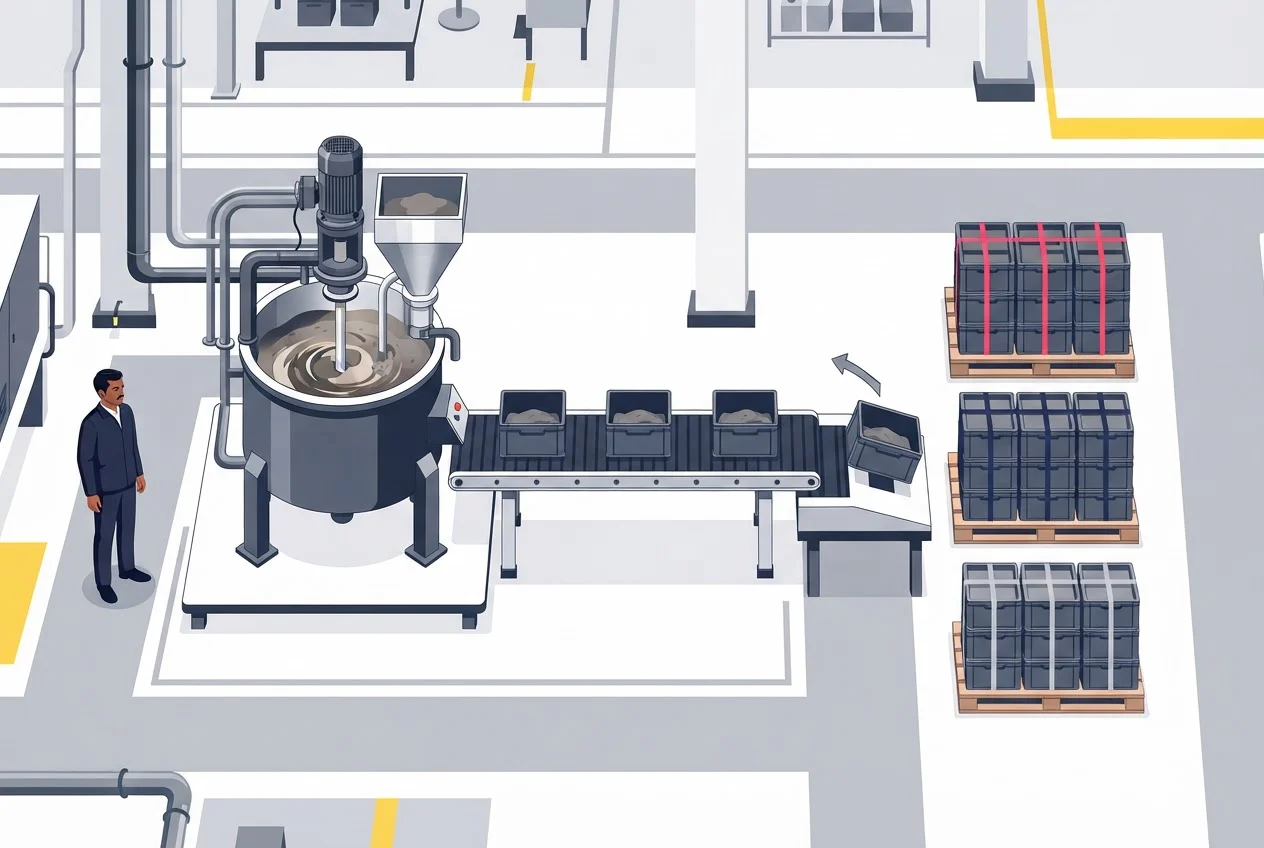
A batch and a lot relate as one to one, one batch to many lots, or many batches to one lot; goods received from a supplier carry the supplier's number plus yours. Look at one production run and follow where the goods go.
| Your situation | Relationship | What to do |
|---|---|---|
| One run, shipped together | One batch is one lot | Use a single number everywhere. This is the simplest case and the definitions allow it. |
| One run, split across distributors, warehouses or shifts | One batch, several lots | Keep the batch number and add a split letter to each lot: |
| Several runs pooled, for example into one customer shipment | Several batches, one lot | Record every batch number against the lot. Never blend runs without a record. |
| Goods you receive from a supplier | Supplier's number plus your own | Capture the supplier's lot or batch number exactly as printed, and add your own receipt number. |
A worked example, using illustrative figures: a run of 10,000 bottles is numbered L2-260915-03. It splits into -A with 6,500 bottles for one distributor, -B with 3,000 for another, and -C with 500 held back for stock and rejects. The lots add up to 10,000 (6,500 + 3,000 + 500), so every bottle is accounted for and each lot traces back to one run.
Pooling needs the most care. Some plants call a grouping of several batches a "lot". That is a company convention rather than something the definitions above describe, so it needs a written rule, and each pooled batch must stay visible inside the lot.
What causes lot and batch numbering to fail in a recall?
Numbering fails when records are not linked, supplier numbers are overwritten, expiry dates stand in for identity, or numbers are reused. A recall asks "which customers have this?" and "what went into it?", and a gap in either direction stops the answer. These are failure points we expect, in our view:
- The number lives only on the pallet label. The production record, the dispatch record and the label must all carry the same number.
- The supplier's number is overwritten. If you replace a supplier's lot number with your own, you cannot tell a supplier which delivery was faulty.
- The expiry date is the identity. Two runs with the same expiry then collide. Hold expiry in its own field; our guide to batch expiry software for first-expiry-first-out (FEFO) operations shows how expiry is handled once it has its own field.
- Numbers are reused. A number must never be issued twice, even years apart.
- Raw materials and finished goods follow different words. Some plants say "lot" for incoming material and "batch" for finished goods. That is fine only if it is written down and applied every time.
A different distributor number may be the distributor's own shipment code. Ask the manufacturer for its batch number to settle whether two lots came from the same run.
How should you format and assign a batch number or lot number?
Use a short, readable pattern that is unique, never reused, and printed identically on the label and in every record. Our recommended pattern is [line code]-[YYMMDD]-[run number]-[split letter].
For example, L2-260915-03-B means line 2, a run on 15 September 2026, the third run, and the second split. Our recommendations for the rules around it:
- Issue each number once and never recycle it.
- Keep it short enough to print on a label and scan.
- Leave the split letter off where there is no split.
- Hold supplier, quantity and location in their own fields, not packed into the number.
- Write the rule as a short procedure so any shift applies it the same way.
How can you test whether your numbers trace a recall?
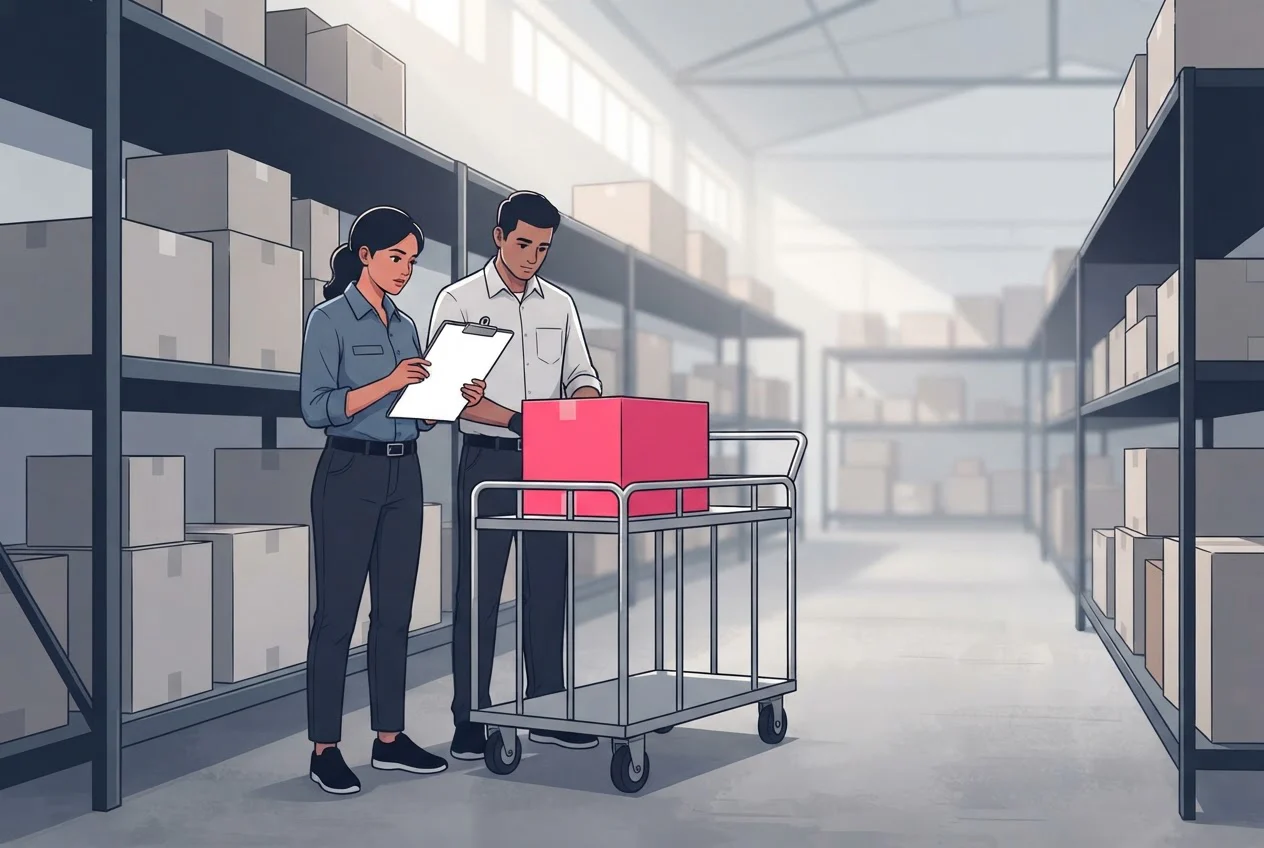
Run a 10-minute recall drill on one number. Our target of 10 minutes is a recommendation, not a regulatory limit. Choose a finished-goods number from last quarter at random, not your cleanest record, and run each check. For a fuller list of what traceability software should prove, see our product traceability software requirements checklist.
Can you list every customer and warehouse that received it?
Pass: the shipped quantities, plus stock on hand, plus rejects, equal the quantity produced. In the example above, 6,500 + 3,000 + 400 in stock + 100 rejected = 10,000. Fail: any unaccounted units.Can you list every raw-material lot that went into it?
Pass: each ingredient line shows the supplier's lot or batch number. Fail: any line that says "various" or shows only your internal number.Can you show when, where and how it was made?
Pass: the production date, line and run record open from the number alone. Fail: you need to ask someone to find a paper file.Can you place the remaining stock on hold?
Pass: you can see where the units are now and stop them being picked. Fail: stock is spread across locations with no count.
If all four pass within 10 minutes, your numbering works whatever you call it.
How do we handle lot and batch numbers in Arka Inventory?
We track inventory by batch, expiry date and serial number inside Salesforce. Each item receives a unique lot or serial number that carries information such as its production date and batch number, and its location, quantity and expiry date are recorded with it, which helps prevent expired or damaged stock reaching customers.
The template above fits that structure, because the number can carry the production date and batch number. Our lot and serial tracking feature is where you set it up.
Setup needs your inventory, product and warehouse data, and onboarding typically takes a minimum of two weeks, depending on data readiness and the complexity of your business rules. Talk to our team about running the recall drill on your own data: our 15-day free trial gives full access to all features, with no credit card required.
Run the recall drill on your own inventory data
Frequently asked questions
No. A lot number identifies a group of units made or received together, while a serial number identifies one unit; our serial number tracking guide covers per-unit tracking in practice.
Sources
- 1.US Code of Federal Regulations, Title 21, section 210.3 (definitions of batch, lot, lot number)
- 2.World Health Organization, Quality Assurance of Medicines Terminology Database (printed 13 October 2025)
- 3.FSSAI, Food Safety and Standards (Labelling and Display) Regulations, 2020, consolidated Version VIII (9 September 2025)
- 4.Drugs and Cosmetics Rules, 1945, rule 96 (copy hosted by CDSCO)
- 5.CDSCO, Not of Standard Quality (NSQ) Alert for the month of January 2025
- 6.US FDA, Traceability Lot Code
- 7.US FDA, Food Traceability Rule requirements and compliance date
- 8.Federal Register, Requirements for Additional Traceability Records for Certain Foods: Compliance Date Extension (7 August 2025)
- 9.Legal Metrology (Packaged Commodities) Rules, 2011 (India Code)